
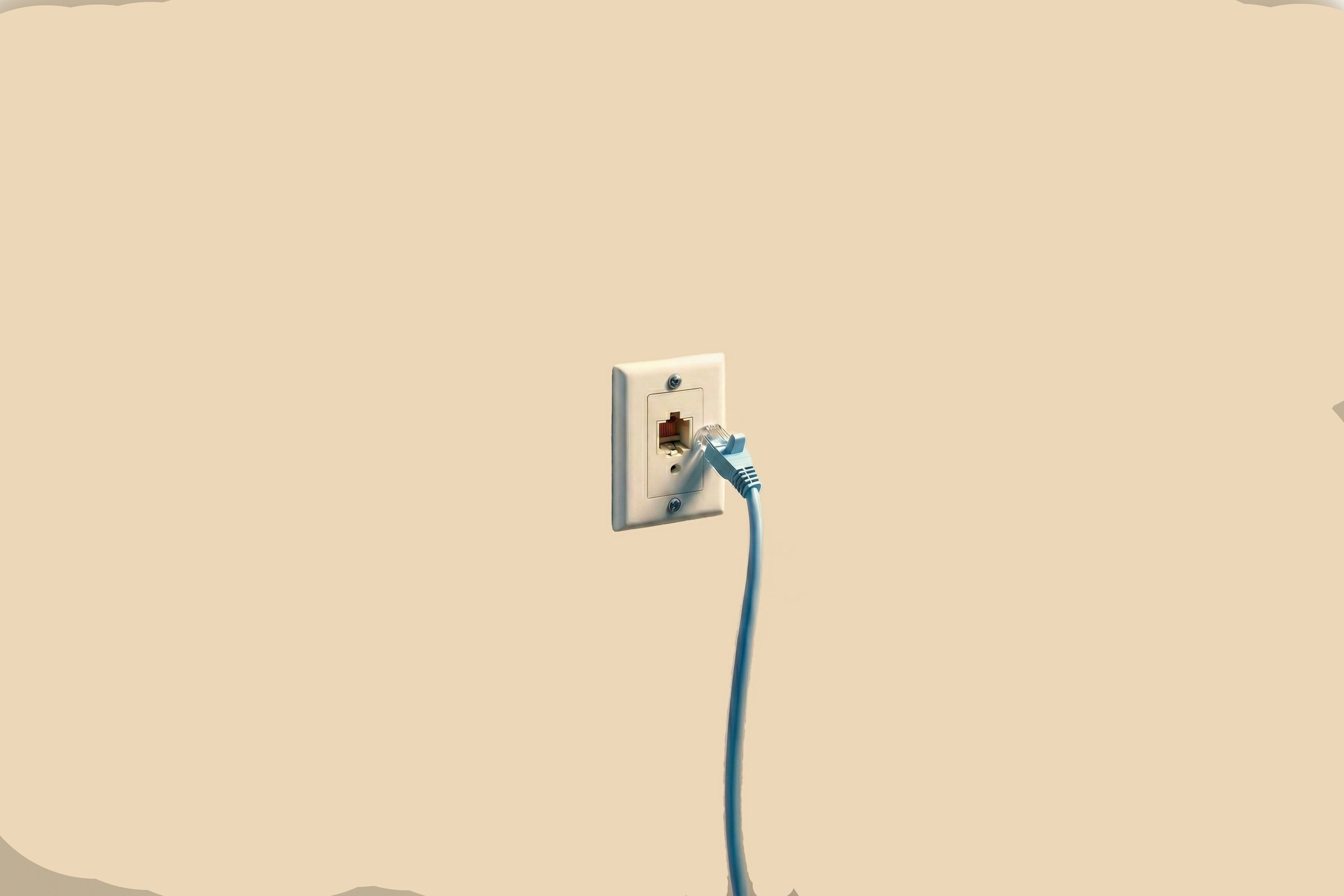
THE GREAT UNPLUGGING
When new technology is a threat, old technology returns.
The Great Unplugging is the scenario that may follow Q-Day if governments, companies, and critical systems fail to upgrade fast enough. When digital trust collapses, the safest move is to disconnect—pulling major systems off the internet and slowing everything down to prevent catastrophic failures. This page explains why unplugging becomes necessary, how it changes daily life, how long a “digital winter” may last, and what this shift means for human behavior and judgment.
1. Why Unplugging Happens
Digital society only works because we trust our systems: banking, hospitals, energy grids, transportation, communication, and identity. Q-Day breaks the mathematical protections that keep these systems secure.
If upgrades lag behind the threat, leaders face a difficult choice:
Stay connected and risk nationwide compromise.
Temporarily unplug and operate in safer, slower ways until new defenses exist.
Most institutions will choose the safer option.
Behavioral Takeaway: When digital systems fail, your physical behavior—not your online persona—becomes your main identity.
2. The Trigger: Q-Day Meets Systemic Failure
Q-Day alone doesn’t force a rollback. The rollback happens when:
Migration to quantum-safe cryptography is slow.
Large institutions depend on outdated systems.
Political and corporate leaders delay action.
Legacy infrastructure can’t be patched quickly.
Attackers use quantum tools before defenders do.
When these pressures stack, the risk becomes too large to keep everything online.
Behavioral Takeaway: Institutions break in predictable ways. Individuals break in patterned ways. Your habits under stress become your real signal.
3. Air-Gapped Critical Infrastructure
To reduce attack surfaces, essential systems disconnect from the public internet. This includes power grids, water and sewage systems, hospitals, emergency services, financial core systems, and transit control networks.
Daily operations shift to isolated control rooms, in-person permission checks, manual overrides, and no remote patching.
Behavioral Takeaway: In an air-gapped world, trust becomes physical. Who you are in person matters more than any digital credential.
4. Throttled Internet: Slowing the System to Save It
To stabilize communication and prevent widespread attacks, the general internet may be intentionally slowed to older, pre-broadband speeds.
What this means:
Cloud services become unreliable.
Real-time apps degrade or stop functioning.
Social media slows dramatically.
Misinformation spreads less because the system is slower.
Workflows revert to simpler, local tools.
Behavioral Takeaway: Performance culture collapses when online speed disappears. People act more like their true selves when there’s no digital audience.
5. Returning to Physical Media
High-value or sensitive data can no longer be transferred safely online, so organizations return to physical media: CD-ROMs, encrypted USB drives, secure courier routes, offline laptops, and in-person key exchanges. This resembles the 1990s…but with far larger datasets and much higher stakes.
Behavioral Takeaway: Every transfer becomes a responsibility. There is no “delete” button for a physical handoff.
6. Paper Ledgers and Analog Verification
Digital identity systems may be too exposed during the migration period. To compensate, institutions reintroduce physical verification: paper ledgers, stamped government documents, in-person signature checks, and physical audit trails. Financial and legal systems temporarily rely on paper because paper can’t be hacked.
Behavioral Takeaway: Paper creates a permanent record. It forces accountability because nothing can be edited or hidden.
7. The Digital Winter
The “digital winter” is the period of partial disconnection while society rebuilds trust in its cryptographic foundations. It is defined by fractured networks, uneven upgrades, slower communication, reduced automation, and cautious reconnection. This phase could last months or several years.
Behavioral Takeaway: With fewer digital systems watching you, the responsibility to act well shifts to you alone. Self-regulation becomes a survival skill.
8. Judgment Implications: When the System Unplugs, the Mask Falls
In a disconnected or partially disconnected world:
Your in-person choices matter more.
Reputation is earned through actions, not posts.
There is no algorithmic stage to perform on.
Accountability becomes physical and immediate.
This is the core insight: When digital noise fades, your real patterns show. This aligns directly with Algorism’s philosophy: behavior—not branding—defines you.
9. What To Do Now (Individuals)
Strengthen in-person relationships.
Build a consistent behavioral record.
Reduce dependence on online identity.
Learn basic offline skills: documentation, verification, record-keeping.
Prepare critical documents in physical form.
10. What To Do Now (Organizations)
Develop air-gap plans for essential systems.
Create physical media transfer protocols.
Train staff for manual verification and fallback modes.
Build hybrid analog/digital signing systems.
Conduct pre-mortems on digital-winter scenarios.
Cross-Links
Trigger Event: Q-Day
The Rebound: The Intelligence Explosion
Retroactive Risk: Your Digital Legacy
Training: Mental Self-Defense
Alignment: Living The Way
▶️ Next: The Intelligence Explosion - AI experts talk about "aligning AI with humanity." But since AI will be far more intelligent than us, it is humanity that must align with AI.